An eco resort is a hotel that is designed and operated to reduce its impact on the environment. This is usually done by using sustainable building materials, managing energy and water carefully, and supporting local communities and ecosystems. In Bali, this matters even more because tourism depends directly on the island’s nature and culture.
Not every property labeled “green” follows these practices, though. This article explains what an eco resort is, the criteria that qualify a hotel as one, and a real example from Bali.
What Makes a Resort “Eco”?
A green label or a towel-reuse card doesn’t make a resort eco. A real eco resort shows its commitment in three areas: how the property is built, how it runs day to day, and how it treats the people and place around it. Together, these areas define sustainable hospitality.
Sustainable Architecture and Building Materials
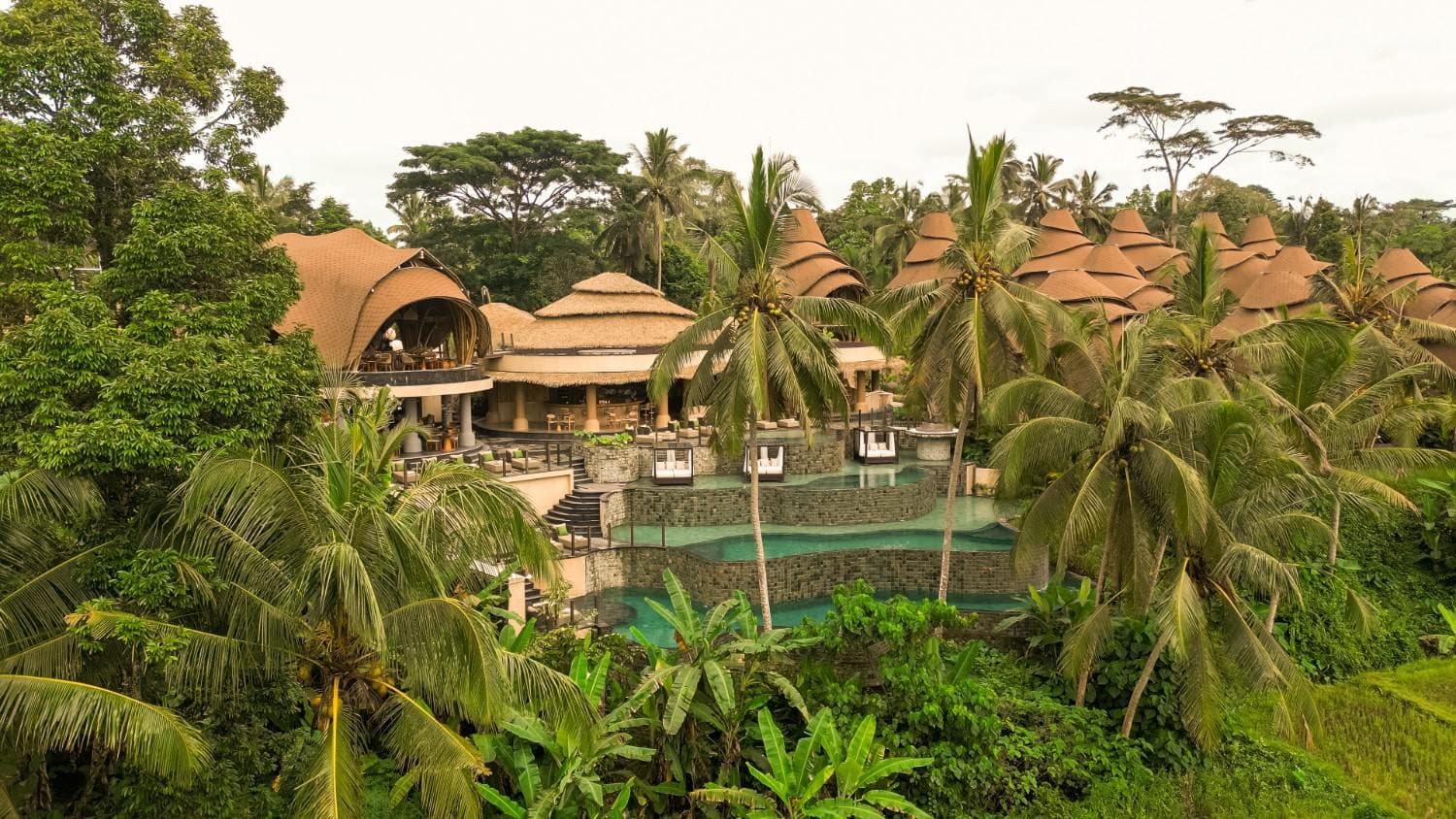
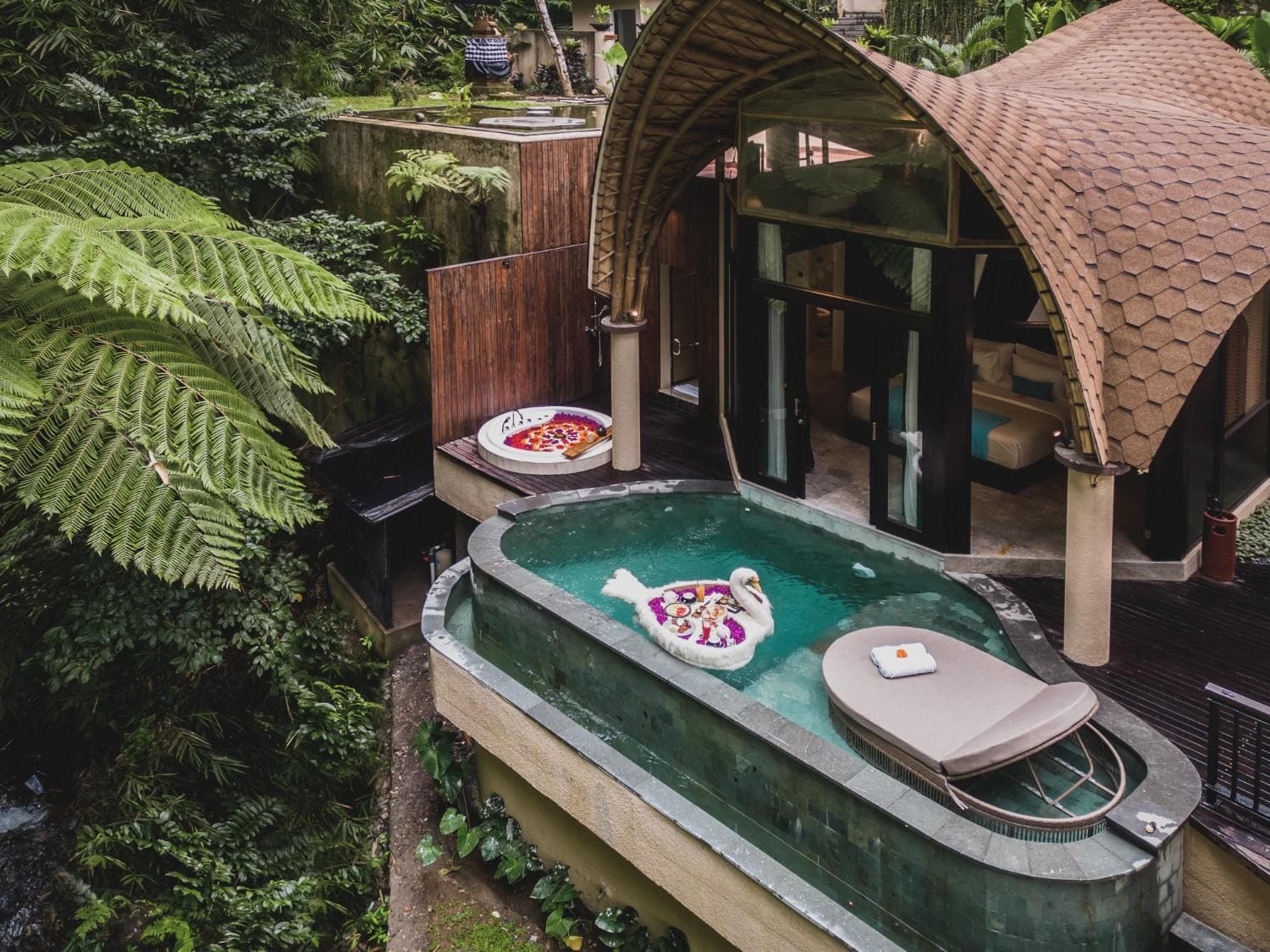
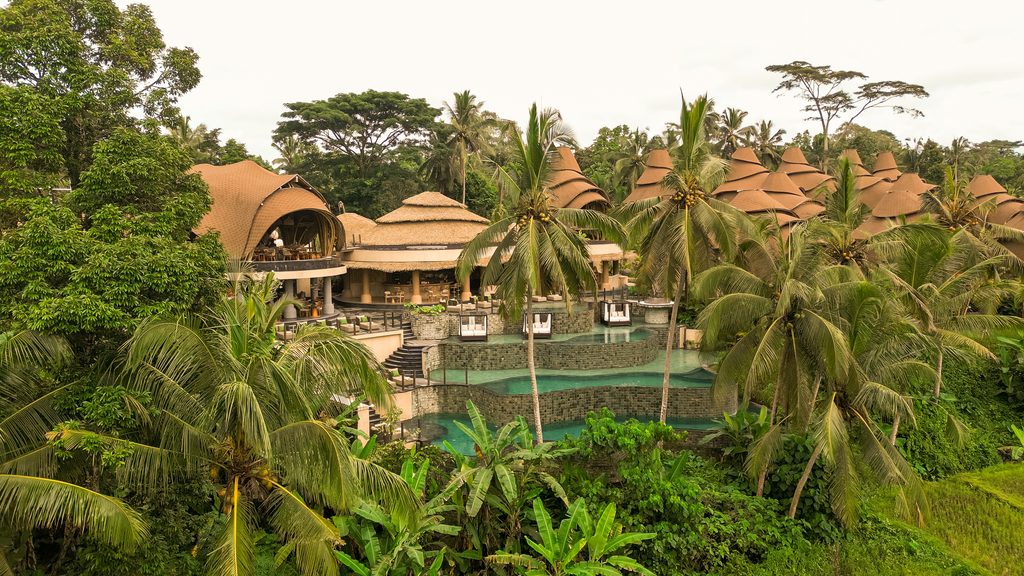
Eco resorts choose locally sourced materials that are locally sourced materials such as bamboo, volcanic stone, recycled timber, and rammed earth. Shorter transport distances mean lower emissions, and traditional building methods keep local craft skills alive. Bamboo architecture is a common example in Bali, where the material grows fast and is easy to find nearby.
Design matters as much as the materials. Open-air layouts, deep roof overhangs, and natural airflow reduce the need for air conditioning, while buildings that follow the existing terrain avoid heavy earthworks and tree clearing.
Energy, Water, and Waste Management
This is where a resort’s claims become measurable. Look for:
- Energy: solar panels, efficient lighting, and solar or heat pump water heating instead of standard electric heaters.
- Water: rainwater harvesting, water-saving fixtures, and on-site wastewater treatment so used water does not reach rivers or rice fields untreated.
- Waste: refill stations instead of plastic bottles, refillable bathroom amenities, composting of kitchen scraps, and clear sorting of recyclables.
A resort that can state what it saves, even in simple terms, is more credible than one that only says it cares.
Community and Cultural Integration
An eco resort treats the local community as a partner. This means hiring and training staff from nearby villages, buying produce from local farmers, and commissioning local artisans for furniture, decor, and art. In Bali, it also means respecting local customs and the Tri Hita Karana philosophy, which values harmony between people, nature, and the spiritual world.
A useful test is whether a meaningful share of the resort’s spending stays in the surrounding community. That is what separates sustainable living hospitality from green marketing.
Eco Resort vs. Regular Resort: What’s the Difference
The main difference between eco resorts and regular resorts is priorities. Regular resorts are built mainly for guest comfort and business efficiency, and environmental impact is often an afterthought. An eco resort puts environmental and social impact at the center of its decisions, from building design to breakfast menus.
Conventional properties may run green programs too, but these are usually add-ons rather than guiding principles.
| Aspect | Regular Resort | Eco Resort |
| Primary priority | Guest comfort and business efficiency | Comfort, balanced with environmental protection |
| Green practices | Add-ons, such as towel reuse programs | Part of daily operations |
| Sourcing | Based on price and supplier convenience | Favors local farmers and artisans |
| Guest experience | Standardized facilities with a uniform feel | Distinctly local, with activities tied to nature and culture |
| Rates | Varies, often lower | Can be higher because of management and material costs |
- From the Guest’s Perspective
Staying at an eco resort often creates a closer connection to the destination. Guests might eat produce from the on-site garden, join craft workshops with local artisans, or walk through areas left in their natural state.
This is low-impact tourism that guests can see and take part in. A regular resort offers a more predictable stay, with full amenities but often little to tell it apart from resorts in other countries.
- Regarding Claims
This is the most overlooked difference. The word “eco” has no single universal definition, so some properties use it mainly as a marketing label. A genuinely eco-friendly hotel backs its claims with independent certifications or clear data on resource savings, so vague promises are worth a few follow-up questions.
Is an Eco Resort More Expensive?
An eco resort often costs more than a conventional resort in the same category, but not always. Local building materials, water treatment systems, sourcing from nearby farmers, and fair wages for local staff all push costs up.
The gap is not always big, though. Solar panels, rainwater harvesting, and designs that reduce the need for air conditioning lower long-term operating costs. Because of this, many eco resorts remain competitive in the mid-range market, and price alone does not tell you how sustainable a stay really is.
To check whether the rate is justified, compare it with conventional resorts of the same class and location, and look for proof behind the claims, such as independent certifications or clear data on resource savings.
A higher rate is easier to justify when a property is open about what it spends on. For travelers who value slow luxury travel, a higher rate makes more sense when you can see exactly where the money goes.
What an Eco Resort Looks Like in Bali

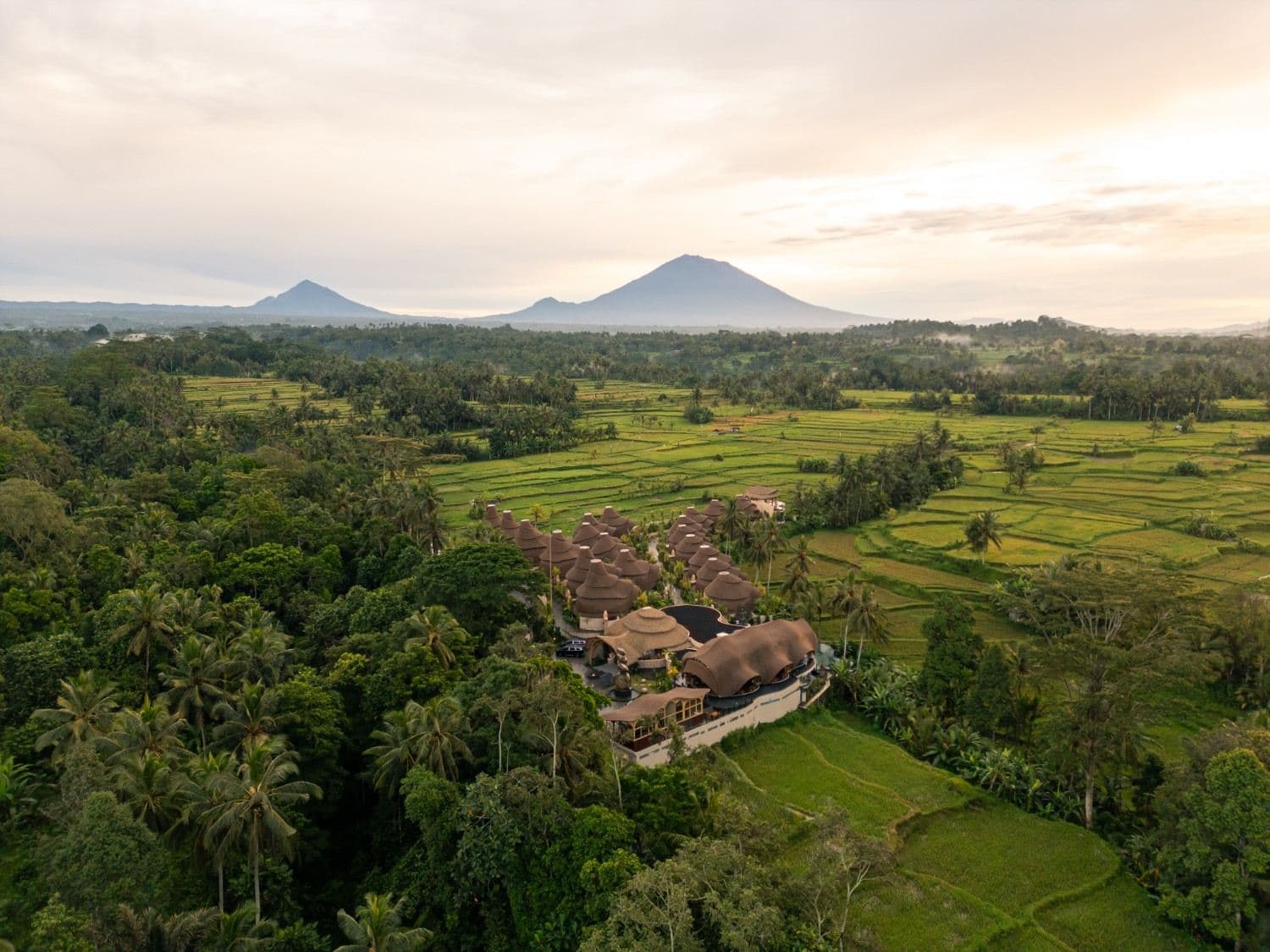
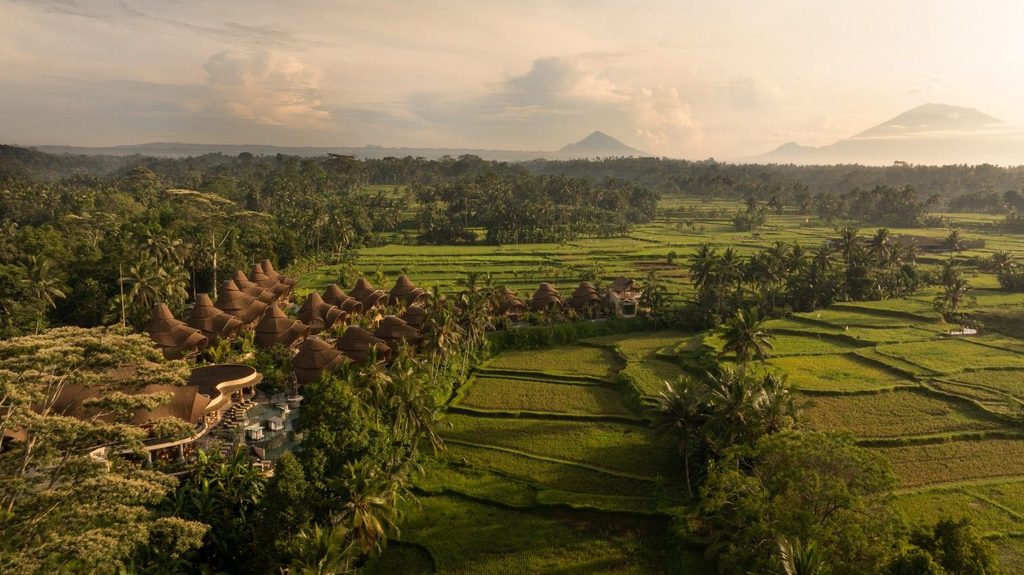
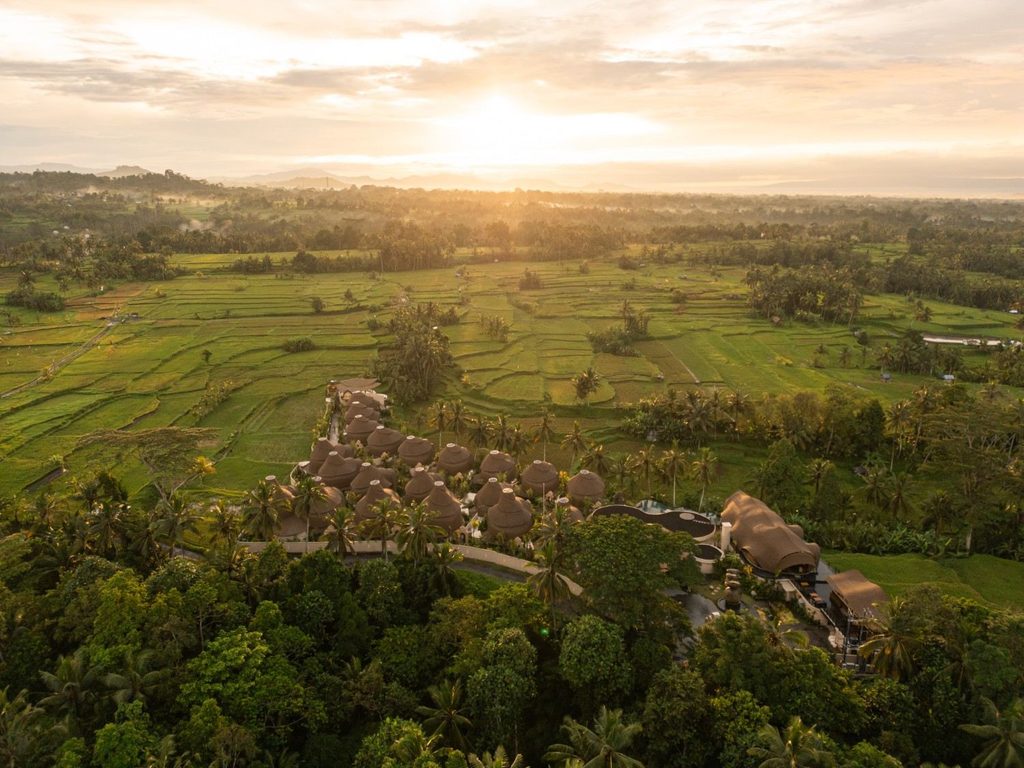
Equipoise Resort Ubud is a fitting example, with green practices that show in bamboo and stone villas and the dining experience. It sits on a ridge in Kenderan Village, Tegallalang, overlooking terraced rice fields and a valley that leads to Manuaba Waterfall, one of Ubud’s hidden waterfalls.
The whole concept is built on the Tri Hita Karana philosophy of harmony between people, nature, and the spiritual world. This approach also shapes its luxury wellness experience, where guests rest in a setting that looks after the land around them.
Energy-efficient systems and water conservation are built into the design. Waste management is a key part of the resort’s sustainability commitment, along with mapping and protecting local biodiversity. Seasonal menu planning helps reduce food waste.
The restaurant buys fresh ingredients from farmers around Ubud, which cuts transport emissions and gives nearby farmers a steady customer base. The resort also supports local artisans and small businesses.
Experience Eco Luxury in Bali
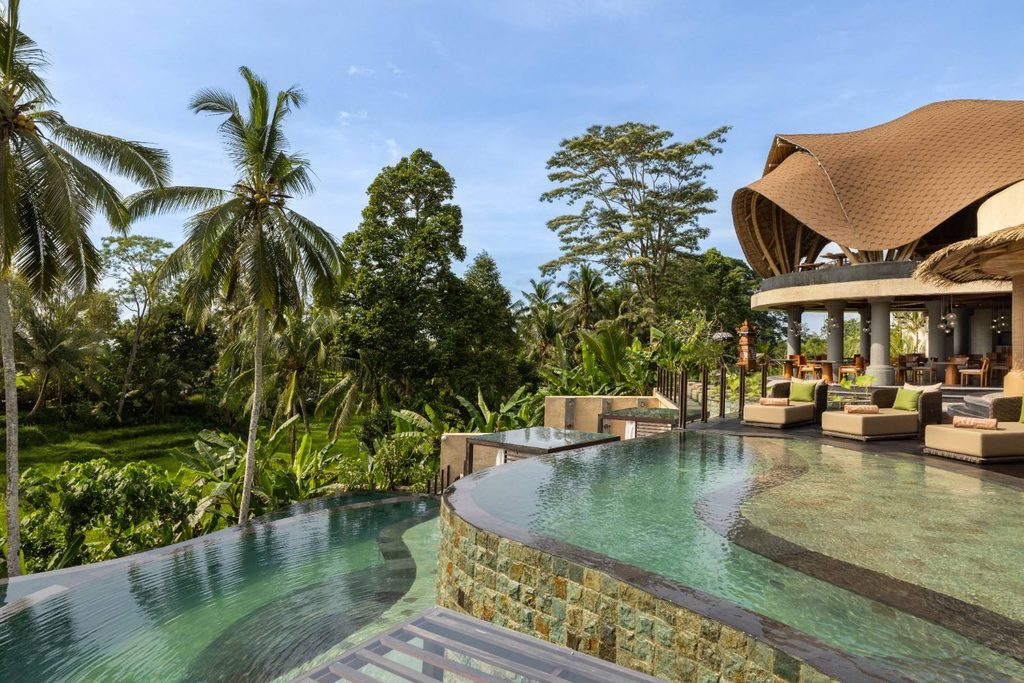
Knowing what an eco resort is makes it easier to choose a stay that matches your values. The idea comes down to balance: comfort for guests, with genuine care for the environment and the local culture, backed by proof you can see.
If you would like to see this in practice, Equipoise Resort Ubud is a welcoming place to start. Plan a stay to enjoy the ridge views, the locally sourced dining, and a setting built with respect for the land and the community around it.